
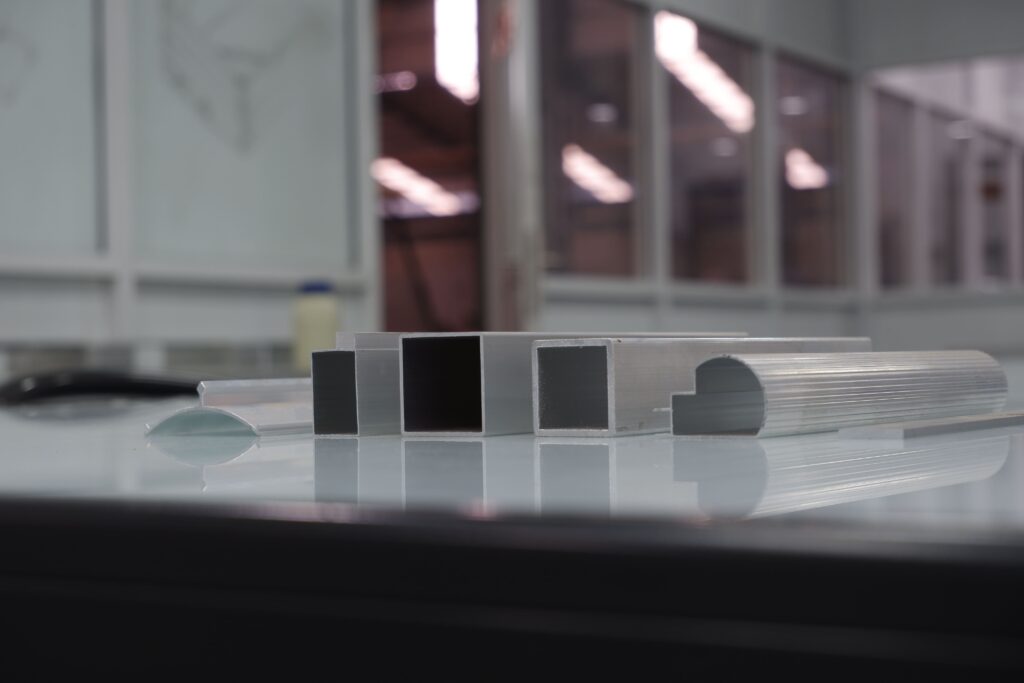
If you’re searching for industrial aluminium profiles that combine strength, durability, and design flexibility, you’re already aware of how critical the right material choice is for your project’s success. Whether you’re sourcing components for machinery frames, automotive structures, electronics housings, or large-scale construction systems, aluminium profiles for industrial applications have become the go-to solution for manufacturers and engineers worldwide — and for good reason.
This guide breaks down what industrial aluminium profiles are, why they matter, where they’re used, and how working with the right aluminium extrusion manufacturer can make the difference between an average product and an exceptional one.
What Are Industrial Aluminium Profiles?
Industrial aluminium profiles are extruded aluminium shapes engineered to meet specific structural, mechanical, or aesthetic requirements. Through the aluminium extrusion process, raw aluminium billets are heated and pushed through a custom die, producing precise cross-sectional shapes — from simple bars and tubes to complex multi-cavity profiles.
Unlike standard off-the-shelf metal stock, industrial-grade profiles are designed with performance in mind: load-bearing capacity, corrosion resistance, thermal conductivity, and dimensional accuracy are all factored into the design and alloy selection. This is why so many industries rely on aluminium profiles for industrial applications rather than alternative materials like steel or plastic.
Why Industries Choose Industrial Aluminium Profiles
1. Lightweight Yet Strong
Aluminium offers an excellent strength-to-weight ratio, making it ideal for applications where reducing overall weight matters — such as transportation, aerospace components, and portable equipment frames — without compromising structural integrity.
2. Corrosion Resistance
Aluminium naturally forms a protective oxide layer, giving industrial profiles long-term resistance to rust and environmental degradation. This makes them suitable for outdoor installations, marine environments, and humid industrial settings.
3. Design Flexibility
Because the extrusion process uses custom dies, manufacturers can produce highly specific cross-sections tailored to exact engineering requirements — something that’s far more difficult and costly to achieve with other metals.
4. Thermal and Electrical Conductivity
Aluminium’s conductivity properties make it a preferred material for heat sinks, busbars, and electronic enclosures where efficient heat dissipation or current flow is essential.
5. Recyclability and Sustainability
Aluminium is 100% recyclable without losing its core properties, making it a more sustainable long-term choice for companies focused on environmental responsibility.
Common Applications of Industrial Aluminium Profiles
Industrial aluminium profiles are used across a wide range of sectors, including:
- Machinery and Equipment Frames – Structural supports, conveyor systems, and modular automation frames.
- Construction and Architecture – Curtain walls, window and door systems, structural beams, and facades.
- Automotive and Transportation – Chassis components, body frames, and lightweight structural reinforcements.
- Electronics and Electrical – Heat sinks, enclosures, busbars, and cable trays.
- Solar Energy Systems – Mounting structures and frames for solar panel installations.
- Furniture and Interior Design – Modular shelving, display systems, and decorative trims.
Because requirements vary so significantly between industries, many businesses turn to custom aluminium profiles instead of relying on standard, mass-produced shapes.
Why Custom Aluminium Profiles Matter
Off-the-shelf profiles work for general-purpose use, but most industrial projects have unique technical demands — specific wall thickness, integrated mounting channels, particular tolerances, or unusual cross-sectional geometry. This is where custom aluminium extrusion becomes essential.
Working with a manufacturer that offers custom extrusion services allows you to:
- Design profiles that fit your exact application without unnecessary machining or modification
- Optimize material usage and reduce production costs over time
- Achieve consistent quality across large production runs
- Integrate functional features (slots, grooves, fins) directly into the profile design
A capable aluminium extrusion manufacturer will work closely with your engineering team from die design through final finishing, ensuring the end product meets both functional and budgetary requirements.
Choosing the Right Aluminium Profile Supplier
Not all suppliers offer the same level of capability, consistency, or service. When evaluating an aluminium profile supplier, consider the following:
- Manufacturing Capability – Can they handle your required alloy grades, profile complexity, and production volume?
- Quality Control Standards – Look for suppliers with established quality assurance processes and relevant industry certifications.
- Finishing Options – Anodizing, powder coating, polishing, and other surface treatments should be available in-house or through trusted partners.
- Lead Time and Logistics – Especially important if you’re sourcing internationally and need predictable delivery schedules.
- Technical Support – A supplier who can advise on alloy selection, die design, and tolerances adds significant value beyond simple manufacturing.
Aluminium Extrusion in Indonesia: A Growing Industrial Hub
Indonesia has steadily strengthened its position as a regional center for aluminium extrusion in Indonesia, supported by growing domestic demand from construction, automotive, and electronics sectors, as well as increasing export activity to neighboring markets.
For both local and international buyers, sourcing from an established Indonesian aluminium extrusion manufacturer offers several advantages:
- Competitive production costs compared to many other markets
- Strategic shipping access across Southeast Asia and beyond
- Increasing investment in modern extrusion technology and finishing capabilities
- Manufacturers experienced in meeting international quality and export standards
Whether you’re a local business scaling up production or an overseas buyer looking to diversify your supply chain, partnering with a reliable aluminium extrusion manufacturer in Indonesia can provide both cost efficiency and consistent quality.
Final Thoughts
Industrial aluminium profiles continue to play a foundational role across manufacturing, construction, electronics, and transportation industries — and the demand for tailored, high-performance solutions is only growing. Choosing the right combination of alloy, profile design, and manufacturing partner can directly impact your product’s performance, durability, and overall cost-efficiency.
If your project requires custom aluminium profiles or you’re looking for a dependable aluminium profile supplier with proven extrusion capabilities, working with an experienced manufacturer ensures your specifications are met precisely — from initial design through final delivery.
Ready to discuss your aluminium extrusion project? Contact our team to explore custom profile solutions tailored to your industrial application.