
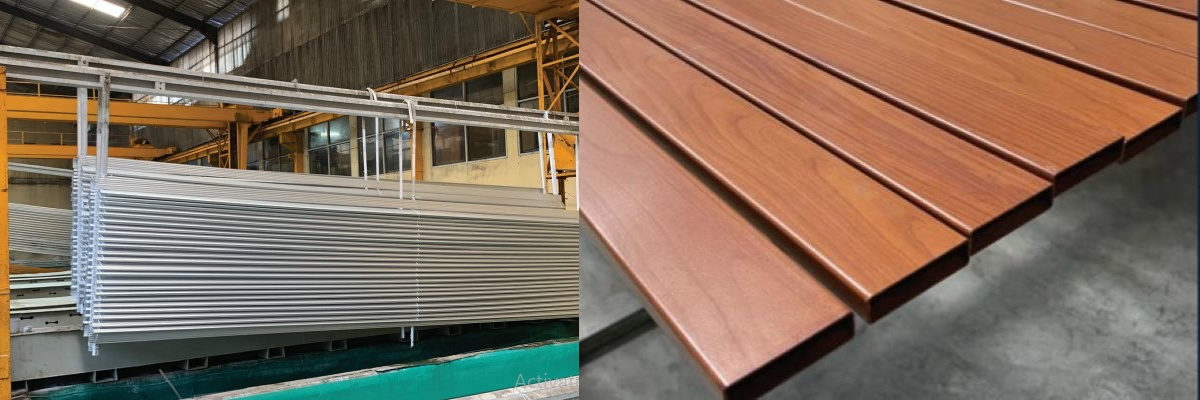
Choosing the right surface finish is a key decision when sourcing aluminium extrusion. The two most common options are anodizing and powder coating, and each serves a different purpose depending on durability, appearance, and application.
This guide explains the difference in a practical way — so you can make the right choice before production.
What Is Anodizing?
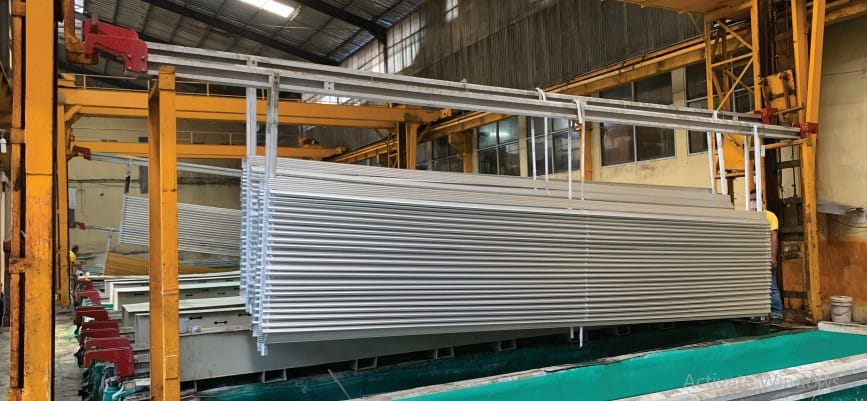
Anodizing is an electrochemical process that forms a protective oxide layer on the aluminium surface. This layer becomes part of the material itself, not a coating on top.
The result is a clean, metallic, matte finish with strong resistance to corrosion and wear. Because anodizing does not add thickness, it maintains precise dimensions, making it ideal for engineering and architectural systems.
Typical specification for export projects:
- AA10–AA20 micron thickness
Common applications:
- Windows and doors
- Curtain walls
- Structural aluminium systems
What Is Powder Coating?
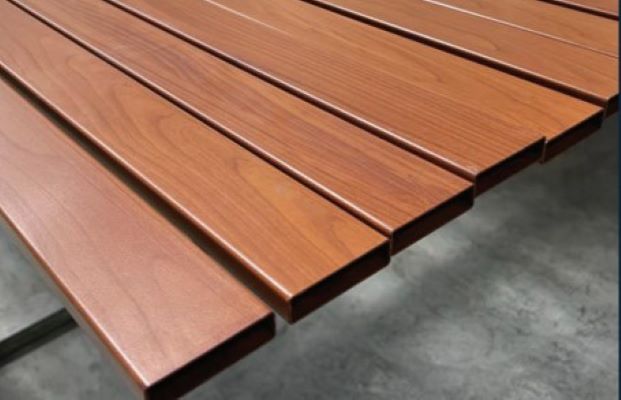
Powder coating is a finishing process where a dry powder is applied and cured to form a solid protective layer on the aluminium surface.
Unlike anodizing, powder coating sits on top of the material and allows full color customization, including matte, gloss, textured, and wood grain finishes.
Common applications:
- Building facades
- Decorative structures
- Projects requiring specific colors or design
Key Differences That Matter
Appearance
- Anodizing → natural metallic, clean, uniform
- Powder coating → wide color options, including custom finishes
Durability
- Anodizing → excellent long-term corrosion and wear resistance
- Powder coating → good protection, depends on coating quality
Thickness
- Anodizing → no added thickness
- Powder coating → typically 60–100 microns
Precision
- Anodizing → ideal for tight tolerances
- Powder coating → better for visual and design-focused use
Do You Need Anodizing Before Powder Coating?
No. Powder coating does not require anodizing.
Instead, aluminium undergoes proper pre-treatment before coating, such as cleaning and chemical conversion, to ensure adhesion and durability.
In special environments (such as marine or high-corrosion areas), a duplex system (anodizing + powder coating) may be used, but this is not standard due to higher cost.
How to Choose
Choose anodizing if your priority is:
- Long-term durability
- Metallic appearance
- Dimensional accuracy
Choose powder coating if your priority is:
- Color and design flexibility
- Decorative appearance
- Brand-specific finishing
Production Consistency Matters
At ALCA, anodizing and powder coating are managed within an integrated aluminium extrusion process. This allows better control over surface consistency, finishing quality, and export requirements across different projects.
Conclusion
There is no single “best” finish. The right choice depends on how your aluminium profiles will be used.
- Anodizing is preferred for performance and precision
- Powder coating is preferred for flexibility and design
Choosing the right finish early helps avoid rework and ensures consistent results, especially for export-oriented projects.